
Dr. Stjepan Picek
Professor, University of Zagreb, Croatia
Associate Professor of Digital Security, Radboud University, Netherlands
https://www.ru.nl/en/people/picek-s
Professor, University of Zagreb, Croatia
Associate Professor of Digital Security, Radboud University, Netherlands
https://www.ru.nl/en/people/picek-s
CTO of IBM Quantum Safe, IBM Research Europe, Zurich, Switzerland
https://research.ibm.com/people/michael-osborne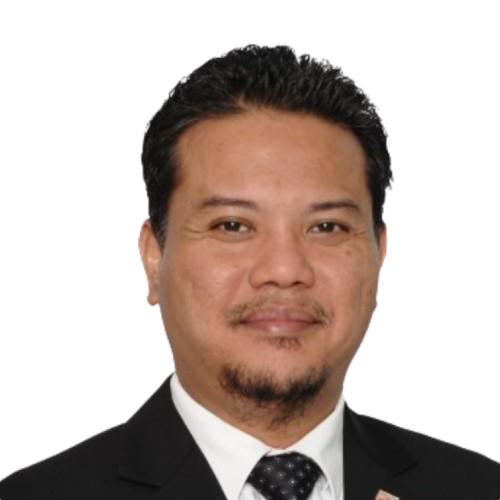
Director of Malaysian Cryptology Technology and Management Centre, Malaysia
Artificial intelligence is rapidly changing how we analyze, attack, and protect cryptographic systems. After initially being treated with considerable skepticism, AI-based techniques now achieve state-of-the-art results across several areas of cryptographic and hardware security. Neural networks have transformed profiled side-channel analysis, improved the modeling and evaluation of physically unclonable functions, supported the detection of hardware Trojans and implementation weaknesses, and assisted increasingly sophisticated forms of cryptanalysis. At the same time, the growing use of AI introduces new security challenges. AI models are often difficult to interpret, reproduce, and validate, while their behavior can be manipulated through adversarial examples, poisoned training data, backdoors, model extraction, and other attacks. These concerns become even more important as large language models and autonomous AI systems are deployed in security-critical environments.
This talk explores the bidirectional relationship between AI and cryptography. First, we will examine examples in which machine learning has improved cryptanalysis and hardware-security evaluation, as well as the methodological limitations that can make such results unreliable or misleading. We will then reverse the perspective and investigate how cryptographic concepts and techniques can contribute to protecting AI systems. Topics will include cryptanalysis-inspired model extraction, cryptographically indistinguishable backdoors, secure distributed learning, and mechanisms for verifying computations and model behavior.
The talk will conclude by outlining open challenges at the intersection of these fields. Rather than viewing AI and cryptography as separate disciplines, the talk argues that their interaction is becoming a central part of the future security landscape.
Dr. Stjepan Picek
Professor, University of Zagreb, Croatia
Associate Professor of Digital Security, Radboud University, Netherlands
The post-quantum cryptography (PQC) transition is routinely framed as a mathematical and engineering upgrade, a straightforward swap of vulnerable public-key algorithms for quantum-resistant equivalents. This view is dangerously incomplete. In reality, the migration to quantum-safe systems is a massive, multi-tiered supply chain coordination challenge spanning independent administrative, technical, and regulatory domains. Drawing on IBM's dual vantage point as a builder of quantum computers and a defender against them, its role in the new NIST algorithms, and its work on open foundations such as Open Quantum Safe and the CBOM standard, it lays out what agility means in practice, across our own estate, our supply chains, our clients, and the guidance governments must provide.
Michael Osborne
CTO of IBM Quantum Safe, IBM Research Europe, Zurich, Switzerland
The convergence of post-quantum cryptography (PQC), quantum computing, and artificial intelligence (AI) is rapidly altering the global cybersecurity landscape. Evolving AI-assisted cryptanalysis, potential algorithmic vulnerabilities, and the geopolitical consolidation of frontier computing demonstrate that PQC is not a static defense, reinforcing the critical need for crypto-agility. Preparing for this convergence requires broad expertise across diverse cryptographic families—including lattice-, hash-, code-, and multivariate-based schemes—alongside continuous assessment of their underlying security assumptions. In response, Pusat Teknologi dan Pengurusan Kriptologi Malaysia (PTPKM) is advancing national readiness through strategic migration, research, capability development, and crypto-agile governance. These efforts ensure Malaysia moves beyond standard post-quantum adoption to build a dynamic, continuous capacity for navigating the intersecting frontiers of cryptography, quantum computing, and AI.
Datuk Prof. Dr. Muhammad Rezal Bin Dato' Kamel Ariffin
Director of Malaysian Cryptology Technology and Management Centre, Malaysia